
A Kungfu Tea Experience at Chengdu People’s Park
-

11-Day China Tour by Train Beijing Xian Chengdu Guilin DMC
Beijing - Xi'an - Chengdu - Guilin

Watching the Art of Kungfu Tea Pouring
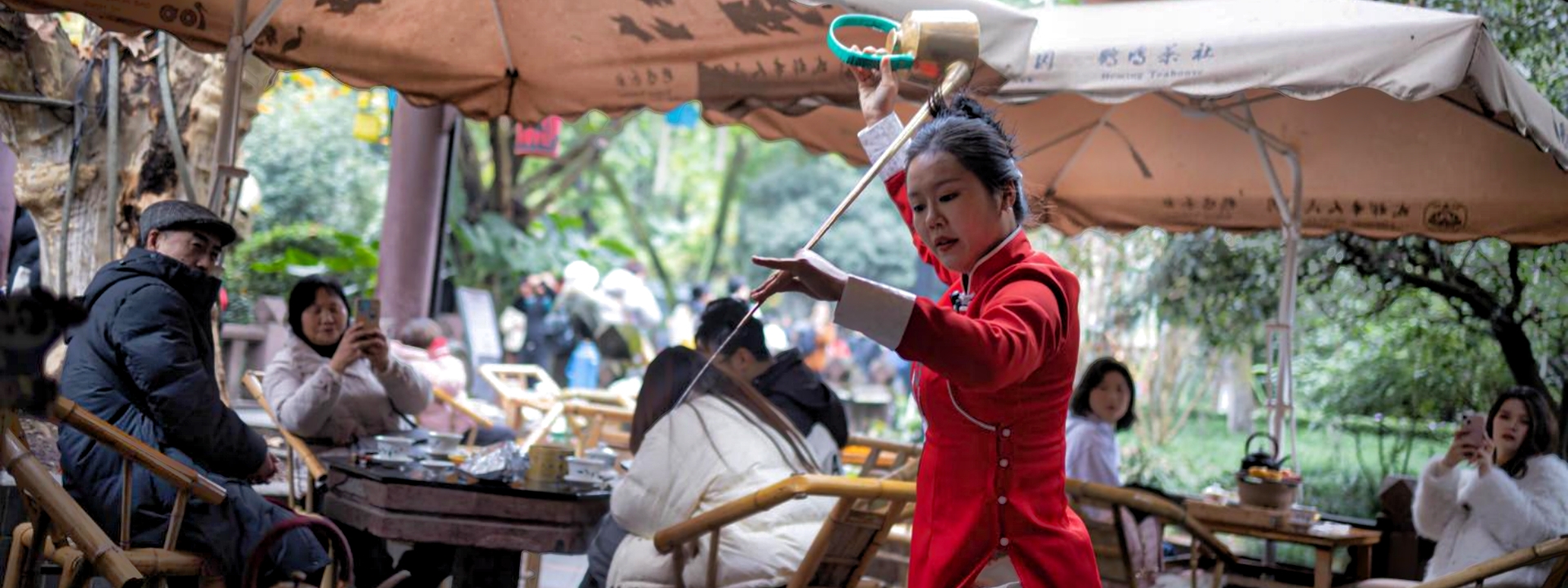
The long-spout tea-pouring performance is an engaging introduction to Sichuan tea culture.
The performer uses a metal kettle with a long, narrow spout, controlling its position through movements that resemble a martial arts routine. Depending on the demonstration, water may be poured from above the head, over a shoulder or from behind the back.
Each movement requires control. The performer must guide the water into a small bowl, maintain a steady stream and stop the pour cleanly.
Part of the enjoyment comes from watching how a large, flowing gesture ends with such a precise result. Even visitors who know little about tea can appreciate the coordination involved.
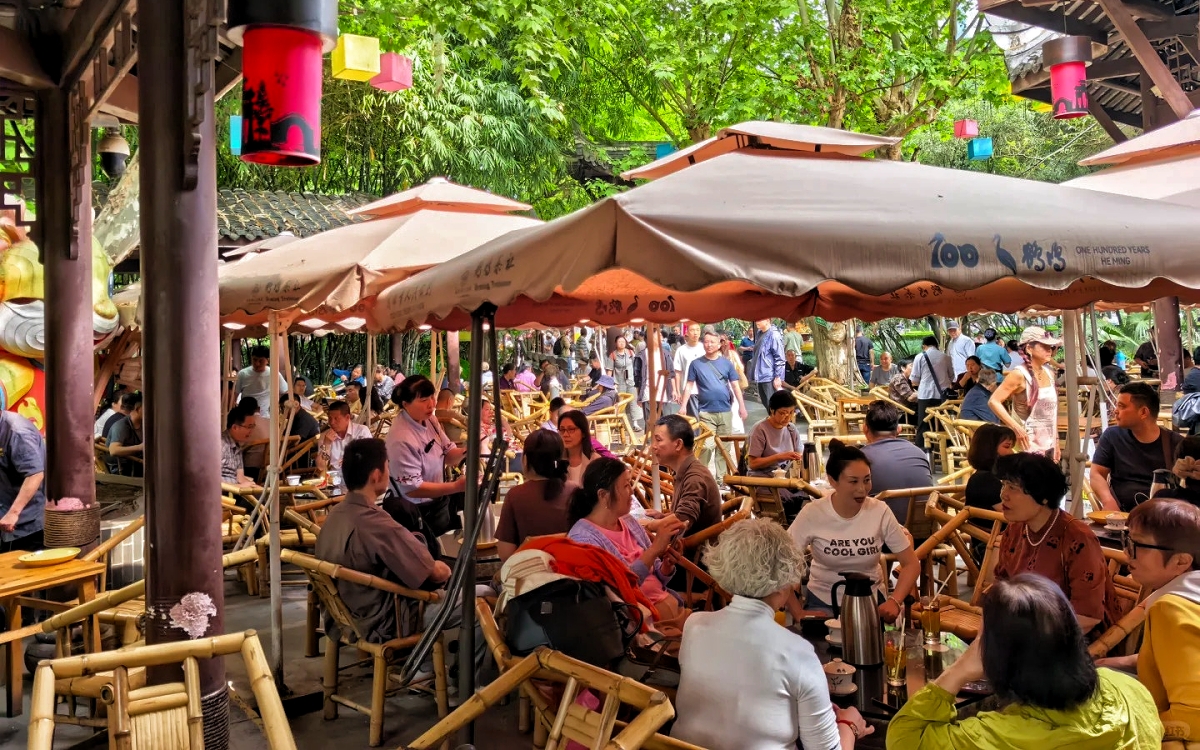
Visitors drinking gaiwan tea at Heming Teahouse in Chengdu People’s Park
For those looking to include a cultural experience in a Chengdu itinerary, a tea-pouring demonstration can be an interesting addition to a traditional teahouse visit.
If watching a dedicated tea-pouring performance is important to your visit, confirm its availability in advance. Ask where it takes place, when it is scheduled and whether an additional charge applies.
Enjoying Traditional Gaiwan Tea
Alongside the performance, take time to enjoy your own tea.
Tea at a traditional Chengdu teahouse is often served in a gaiwan (盖碗): a bowl with a lid and saucer. Loose leaves steep directly in the water, and the lid helps hold them back as you drink through a small opening.
If this is your first time using a gaiwan, ask your guide or the staff to demonstrate. Allow the tea to cool, hold the bowl carefully and take a small sip.
Jasmine tea is a familiar choice, while green tea offers another option. You do not need specialist knowledge to enjoy the experience, choosing a tea you like and taking your time is enough.
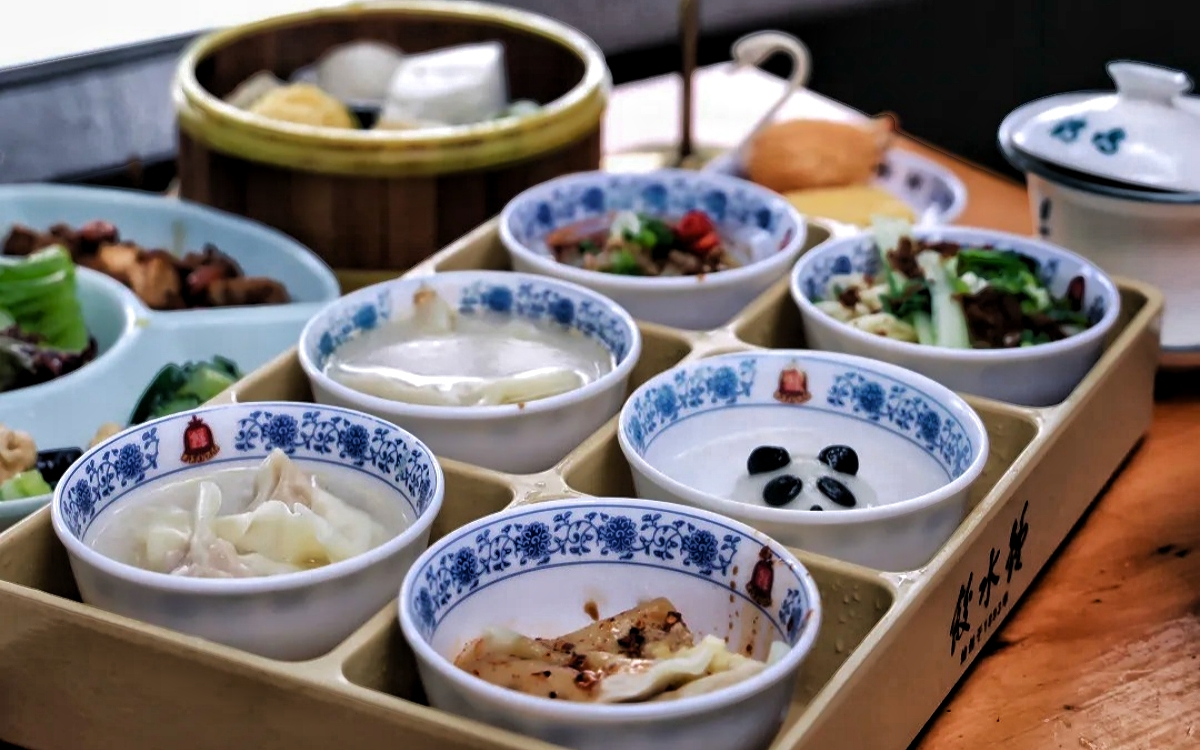
Tea and snacks at Heming Teahouse in Chengdu People’s Park
Why Include a Tea Experience in a Chengdu Itinerary?
When planning a Chengdu itinerary, it is easy to fill each day with sightseeing. A visit to People’s Park creates space to sit down, rest and spend time in a public place used by the people who live here.
The tea-pouring performance, when arranged, gives visitors something distinctive to watch. The time around it offers a closer look at the social role of a teahouse, where conversation and companionship are as much a part of the visit as the drink itself.
For private China tours and group itineraries, this can be a useful change of pace. Guests can enjoy a shared cultural activity while having time to talk, ask questions and observe their surroundings.
The experience can also fit into a half-day sightseeing programme in central Chengdu, particularly when combined with nearby attractions such as Kuanzhai Alley (Wide and Narrow Alleys).
For longer Sichuan itineraries, a visit to People’s Park can be combined with Chengdu’s other cultural attractions before travelling north to Jiuzhaigou Valley, where lakes, waterfalls and mountain scenery offer a different experience of the region.
-
5-Day Chengdu Tour B2B Host | Pandas & Jiuzhai Valley
Chengdu Panda Research Base - Sanxingdui Museum - Jiuzhai Valley National Park

Planning Your People’s Park Tea Experience
Allow around 1 to 2 hours for a short walk through the park and a comfortable tea stop. This gives you time to look around, find a seat and enjoy your tea without rushing. Groups that want to spend longer observing local life can allow additional time.
People’s Park is accessible via Chengdu Metro Line 2, People’s Park Station. The public park is free to enter, while tea, snacks and any additional services are charged separately.
Before ordering, check the tea menu and confirm the price. Do not assume that a regular tea order includes a dedicated performance or other services.
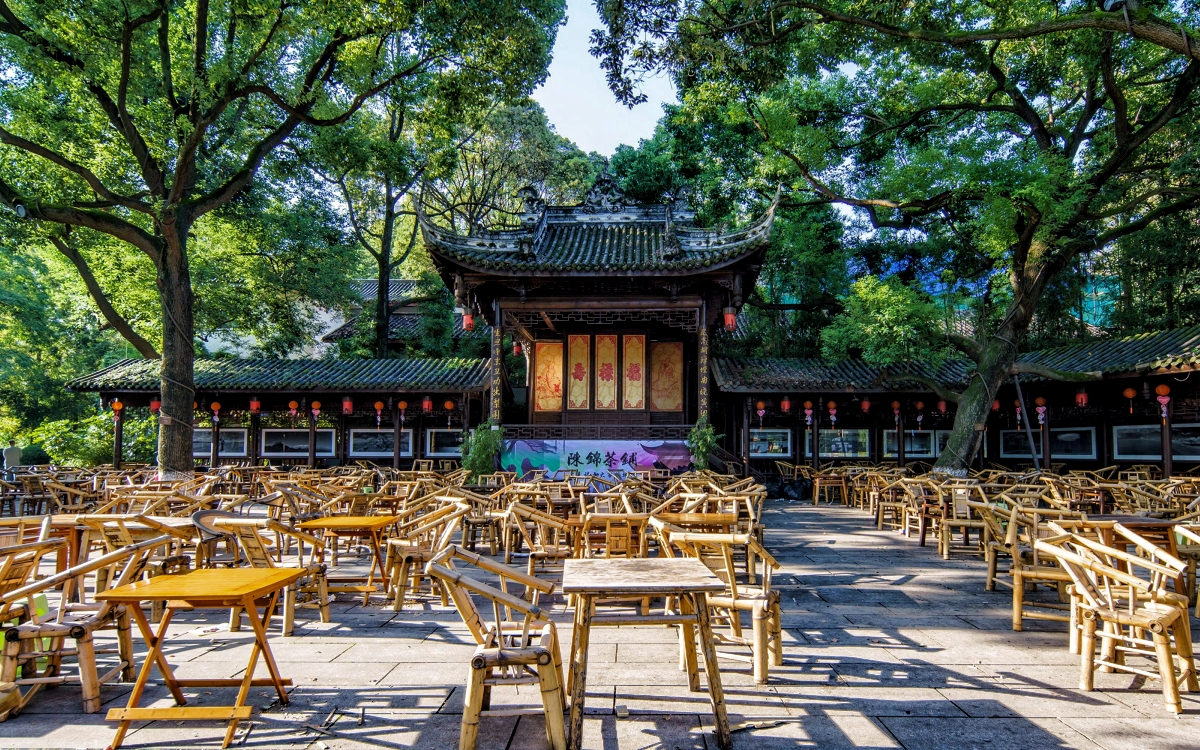
Traditional bamboo chairs and tea tables at a Chengdu local teahouse
For travel agencies arranging group visits, a few additional checks can help avoid delays:
- Confirm seating: Popular areas can become crowded, particularly on weekends and public holidays. Ask whether the venue can accommodate the full group.
Check performance arrangements: Confirm the location, timing, availability and any additional charge if a demonstration is required.
Allow flexibility: If the preferred seating area is full, the group may need to use separate tables or spend time walking through the park first.
Explain the experience: A short introduction to gaiwan tea and long-spout pouring can help first-time visitors understand what they are seeing.