

China Visa Support & Invitation Letters: Complete Guide
An invitation letter may be required when a traveler applies for a Chinese visa, but it is not required in exactly the same way for every applicant.
The requirements can depend on the traveler’s nationality, place of application, purpose of travel and the instructions of the Chinese embassy, consulate or visa application centre handling the case.
For overseas travel agencies arranging tours to China, it is important to understand when an invitation letter may be used, who can issue it and why all information in the letter must match the planned journey.
Do visa-free travelers need an invitation letter?
Normally, a traveler entering China under an applicable visa-free policy does not need an invitation letter for a visa application because no visa application is being made.
However, visa-free travelers may still be asked to show documents supporting the purpose of their visit when entering China. These may include:
- return or onward flight tickets;
- hotel reservations;
- a travel itinerary;
- contact details in China;
- an invitation letter where relevant.
Official visa-free guidance from the Chinese Visa Application Service Center recommends carrying documents that support the declared purpose of entry, even when an invitation letter is not formally required.
Who may need an invitation letter?
An invitation letter may be relevant to travelers who need to apply for a Chinese visa before departure.
For tourism, this usually concerns travelers applying for an L visa.
Depending on the application location, an applicant may be asked to provide either:
- travel documents such as round-trip flight bookings, hotel reservations and a proposed itinerary; or
- an invitation letter issued by a relevant organization or individual in China.
The exact document requirements are not identical in every country. Applicants should follow the instructions of the Chinese embassy, consulate or visa centre responsible for their application.
Is an invitation letter always required for a Chinese tourist visa?
No. An invitation letter is not always the only way to support an L visa application.
Some Chinese visa offices accept travel documents such as:
- a round-trip flight reservation;
- proof of accommodation;
- a day-by-day travel plan.
An invitation letter from a relevant organization or individual in China may be accepted as an alternative or additional supporting document.
For example, official Chinese visa guidance published by the Embassy of China in Sweden states that an L visa application may be supported by flight, hotel and travel-plan documents, or by an invitation letter from a relevant entity or individual in China.
Requirements may differ between application locations, so overseas agencies should check the rules for the individual applicant rather than assume that one document list applies worldwide.
Who can issue an invitation letter for a China tourist visa?
Depending on the application requirements, an invitation letter may be issued by a relevant organization or individual in China.
For an organized tour, a China-based travel company may be able to provide a supporting letter connected with the travel services it is arranging.
The company should only issue the letter when:
- the traveler is identifiable;
- the planned visit is genuine;
- the company is involved in arranging the trip;
- the dates and itinerary can be reasonably verified;
- the information provided by the overseas partner is complete and accurate.
An individual in China may also issue an invitation letter in circumstances accepted by the relevant visa authority. Additional identification documents from the inviting individual may be required.
What information should an invitation letter contain?
Official Chinese visa guidance generally identifies three main categories of information.
What information is needed about the applicant?
The letter should normally include:
- full name as shown in the passport;
- gender, where required;
- date of birth;
- nationality;
- passport number;
- other identifying information requested by the visa authority.
The spelling and order of the name should match the passport. Nicknames, shortened names and internal booking names should not be used.
What information is needed about the visit?
The letter should normally state:
- purpose of travel;
- intended arrival date;
- intended departure date;
- places to be visited;
- proposed itinerary or accommodation;
- relationship between the traveler and the inviting party, where required;
- source of travel expenses, where required.
The information should be consistent with the visa application and the actual journey being arranged.
What information is needed about the inviting party?
The letter should normally include:
- name of the inviting organization or individual;
- address in China;
- contact telephone number;
- official company stamp, where issued by an organization;
- signature of the legal representative, authorized signatory or inviting individual, as applicable.
These information categories are included in official Chinese Embassy visa guidance.
Is a tourist invitation letter the same as a Group L invitation letter?
No. An ordinary invitation letter and an official Invitation Letter for Tourist Group are not necessarily the same document.
A Group L visa is intended for eligible tourists traveling to China as an organized group. In some application locations, a Group L application requires an official tourist group invitation issued through an authorized tourism authority in China following a request from a local travel agency.
For example, official guidance published by the Embassy of China in Pakistan describes a Group L visa as applying to a tourist group of at least five people and refers to an Invitation Letter for Tourist Group issued by an authorized tourism office.
A standard company letter should not be described as an official Group L invitation unless it has been issued through the appropriate authorized procedure.
Is a tourist invitation letter the same as a business invitation?
No. The type of invitation should match the real purpose of the visit.
A tourist invitation supports a genuine leisure visit. A business invitation is connected with commercial activities, meetings, trade events or other eligible business purposes.
A leisure traveler should not be given a business invitation simply because it appears more convenient. Likewise, a business visit should not be presented as a holiday if business is the true purpose of travel.
The visa category, invitation letter and actual visit should be consistent.
Does an invitation letter guarantee visa approval?
No. An invitation letter does not guarantee that a Chinese visa will be issued.
The letter is only one part of the supporting documentation. The responsible Chinese authority may:
- request additional documents;
- ask for an original letter;
- contact the inviting party;
- ask the applicant to attend an interview;
- approve or refuse the application;
- decide the visa’s validity, number of entries and permitted duration of stay.
A legitimate China travel company can provide genuine supporting information where applicable, but it cannot make the visa decision.
Can a travel company issue an invitation before the tour is confirmed?
The company should have enough verified information to show that the proposed visit is genuine.
The exact arrangements may still change before arrival. A hotel might be replaced, a train time might change or a daily visit might be adjusted.
However, the company should not issue an invitation for:
- an unidentified traveler;
- a trip it is not involved in arranging;
- dates that have not been checked;
- a purpose of travel it cannot verify;
- an itinerary created only to obtain a visa;
- information it knows to be false.
The company may also have its own booking, payment or document-review requirements before issuing any supporting letter.
What should an overseas agency provide to its China partner?
Before requesting an invitation letter, the overseas travel companies should normally provide accurate information for each traveler, including:
- passport name;
- nationality;
- date of birth;
- passport number;
- passport issue and expiry dates, if required;
- intended arrival and departure dates;
- destinations in China;
- flight information, if available;
- accommodation arrangements;
- purpose of travel;
- the consulate or visa centre where the application will be submitted.
A clear passport copy may be required to check the information. Passport files should be sent through an agreed secure channel.
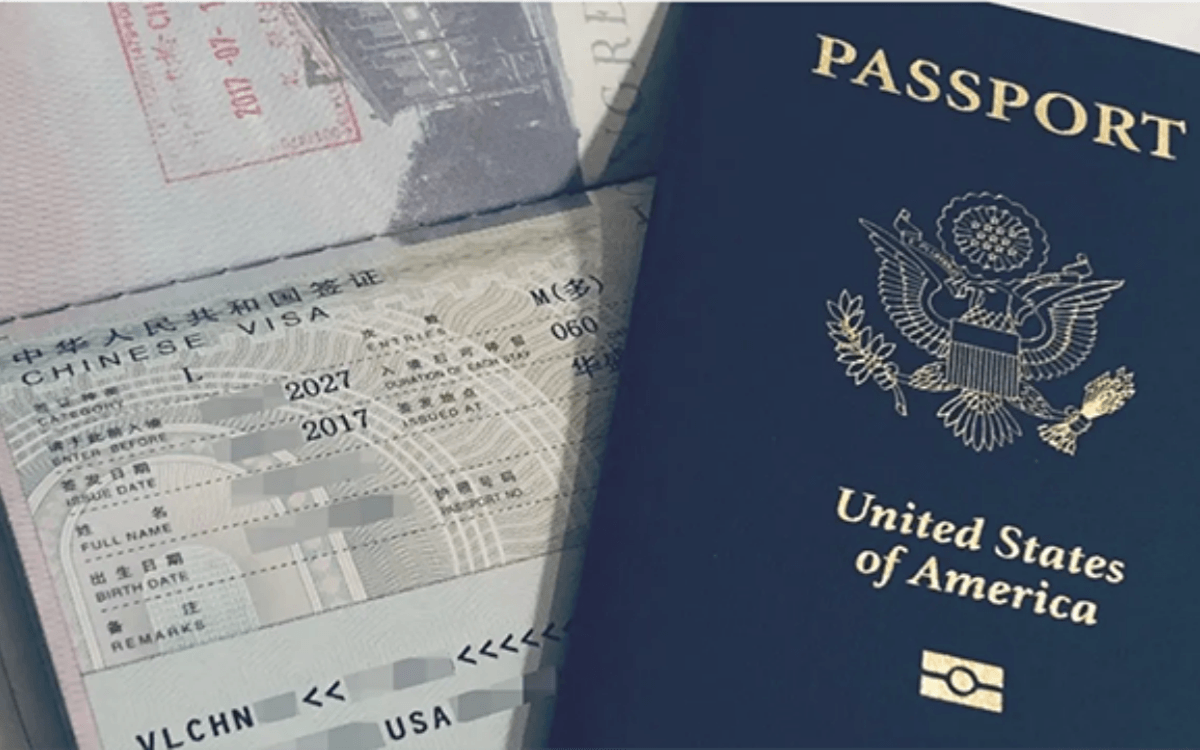
Sample passport and Chinese visa
What should be checked before the letter is issued?
Both travel partners should review the letter before it is used.
The following points should be checked:
- Does the name exactly match the passport?
- Is the passport number correct?
- Are the date of birth and nationality correct?
- Are the arrival and departure dates accurate?
- Does the itinerary match the planned tour?
- Is tourism the genuine purpose of travel?
- Are the inviting company’s details correct?
- Has the document been properly signed and stamped where required?
- Does the relevant visa office accept this type of letter?
- Are any additional supporting documents required?
A small error in a name, passport number or travel date can delay an application or create questions during the review.
Can one invitation letter cover a whole tour group?
This depends on the type of application and the requirements of the responsible visa authority.
Some applications may use individual invitation letters. Others may allow a letter with an attached traveler list. An official tourist group invitation follows a separate authorized process.
The overseas agency should confirm the required format before asking its China partner to prepare the documents.
If group members apply in different countries, they may need different supporting documents even though they are joining the same tour.
Does a digital copy of the invitation letter work?
A scanned or electronic copy may be accepted in some cases, but an original may still be requested.
The applicant should check whether the relevant Chinese embassy, consulate or visa centre requires:
- a scanned copy;
- a printed copy;
- the original signed document;
- an official group invitation;
- additional proof from the inviting organization.
The method accepted in one country should not automatically be assumed to apply in another.
What happens if an invitation letter contains false information?
False information may lead to visa refusal, denial of entry and penalties for the parties involved.
Under China’s new exit and entry regulations, an applicant who provides false materials or makes a false statement may be refused a visa or entry. A foreign national may also be prohibited from entering China for between one and five years.
An organization or individual issuing false invitation letters or application materials may face fines and other legal consequences.
The inviting party is responsible for the accuracy of the invitation and may be required to cooperate with official verification.
How early should an invitation letter be requested?
Overseas tour operators should check the visa application timeline as soon as the basic tour arrangements are available.
Enough time should be allowed to:
- collect passport information;
- check traveler details;
- confirm the proposed itinerary;
- prepare the letter;
- correct any errors;
- submit the application;
- respond to requests for additional documents.
An invitation letter should not be prepared so early that the travel information is still unreliable, or so late that there is no time to correct mistakes.
What is the most important point for travel agencies?
An invitation letter must describe a real traveler, a real purpose of travel and a genuine proposed visit.
It is not a guarantee of visa approval and should not be treated as a standard document that can be issued without checking the booking.
Before arranging an invitation letter, overseas travel agencies should confirm the current requirements with the responsible Chinese embassy, consulate or visa application centre and provide their China partner with complete and accurate traveler information.
This article provides general information for travel industry partners and does not constitute legal or immigration advice. Visa document requirements may vary according to nationality and place of application and should be checked before submission.