

China Entry Rules for Travel Agencies: 2026 Update
China has introduced new rules covering visa applications, invitation letters, entry-related services and the protection of travelers’ personal information.
The new regulations were published on 22 July 2026 and will take effect on 15 September 2026.
Travelers who are not eligible for visa-free entry will normally need to obtain an appropriate Chinese visa before departure. Those visiting China for tourism will generally need to apply for a tourist visa (L visa), unless another visa exemption applies.
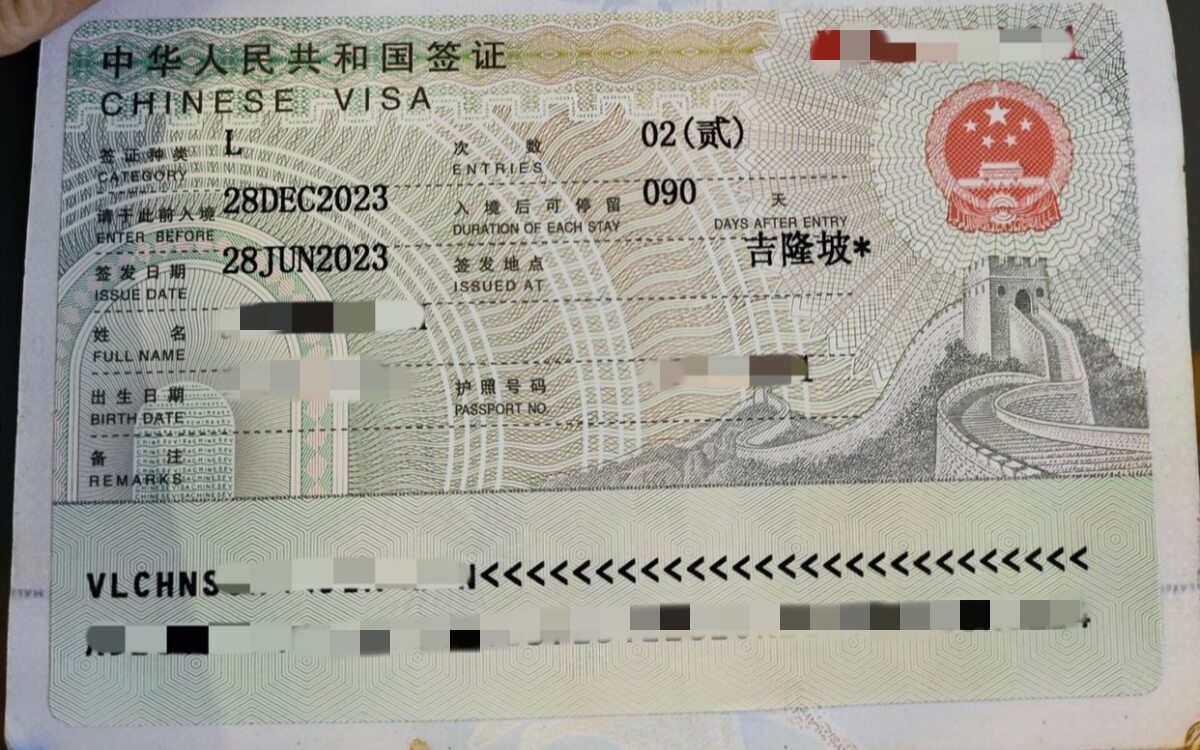
A sample of Chinese L Visa
For overseas travel agencies and tour operators, the main message is clear: visa information and supporting documents must be accurate, and agencies must take proper care of travelers’ passport and personal information.
Here is what overseas partners arranging tours to China need to know.
What has changed?
The new regulations provide clearer requirements for:
- Chinese visa applications;
- invitation letters and supporting documents;
- companies providing visa or entry-related services;
- the handling of passport and personal information;
- penalties for providing false information.
These rules do not replace China’s existing visa or visa-free entry policies. They focus mainly on how applications and entry-related services should be handled.
Do visa application details need to match the actual trip?
Yes. The purpose of travel and the supporting documents must be genuine and lawful.
Chinese visa and immigration authorities may ask applicants to provide additional documents or explain:
- why they are visiting China;
- where they plan to travel;
- where they will stay;
- who is arranging or hosting the visit;
- how long they intend to remain in China.
For group and leisure travel, the itinerary, hotel information, traveler details and stated purpose of travel should match the actual arrangements.
Travel agencies should not change an itinerary or describe the purpose of a trip differently simply to make a visa application appear easier to approve.
Who is responsible for an invitation letter?
The organization or individual issuing an invitation letter for Chinese visa is responsible for the accuracy of the information it contains.
If requested, the inviting party must also cooperate with the Chinese authorities in verifying the traveler, the purpose of the visit and the proposed arrangements.
This may apply when a China-based company provides supporting documents for:
- leisure groups;
- school or student groups;
- business visits;
- conferences and events;
- special-interest tours;
- other organized visits to China.
Invitation letters should only be issued for genuine travelers and genuine travel arrangements.
What happens if false information is provided?
A Chinese visa may be refused if an applicant submits false documents or makes a false statement. The traveler may also be refused entry into China.
A foreign national who provides false information when applying for a Chinese visa or entering China may be banned from entering the country for between one and five years.
Individuals and organizations that provide false invitation letters or other false supporting documents may also face fines and further legal penalties.
Can a travel agency guarantee a Chinese visa?
No. The final decision is always made by the relevant Chinese visa authority.
A travel company may provide:
- general visa information;
- a proposed or confirmed tour itinerary;
- hotel and transportation information;
- genuine supporting documents related to booked travel services.
However, providing these documents does not guarantee that a visa will be approved.
Travel agencies should avoid expressions such as “guaranteed Chinese visa” or “100% visa approval.” A more accurate description would be “visa information and supporting documents available where applicable.”
Do companies providing visa services need to register?
The new regulations introduce a registration system for organizations and individuals providing entry and exit intermediary services.
These services may include:
- entry and exit policy consultation;
- document application assistance;
- visa or permit procedure handling;
- other services related to entry into or departure from China.
A new company providing these services must register with its local immigration authority within 15 days of establishment.
Companies already providing these services before 15 September 2026 must complete registration within 90 days after the regulations take effect.
Further details about the registration process will be issued separately by the relevant Chinese authorities.
Is providing visa information the same as processing a visa?
Not necessarily.
There is an important difference between:
- giving general information about Chinese visa requirements or providing genuine documents connected with a booked tour; and
- accepting instructions to apply for a visa, process documents or complete entry procedures on behalf of a traveler.
The second type of service may be treated as a regulated entry and exit intermediary service.
Travel companies should clearly describe what assistance they provide and avoid presenting general travel support as a guaranteed visa-processing service.
Can an overseas agency provide entry services inside China?
The regulations state that overseas companies and organizations may not provide entry and exit intermediary services within China.
This does not prevent an overseas travel agency from selling or organizing China tours in its own country.
However, if regulated entry-related services need to be provided inside China, the overseas agency may need to work with a legally established China-based company.
What are entry service providers not allowed to do?
Companies providing entry and exit intermediary services must not:
- publish false or misleading information;
- exaggerate their services to attract clients;
- prepare or assist with false application documents;
- improperly help someone obtain a visa, passport, stay permit or residence permit;
- disclose, sell or unlawfully share personal information;
- operate outside their registered scope of business;
- assist with illegal cross-border activities.
Visa-related information on a travel company’s website should therefore be factual and should not promise results that the company cannot control.
How should passport information be handled?
Travel agencies often need to collect sensitive information, including:
- names and dates of birth;
- passport numbers and copies;
- visa details;
- contact information;
- flight and train details;
- hotel arrangements.
This information should only be collected when it is needed for the trip.
Travel companies should also have clear procedures covering:
- who can access the information;
- how it is sent to partners;
- where it is stored;
- how long it is kept;
- when and how it is deleted.
Overseas agencies should use secure methods when sending passport copies and traveler lists to their partners in China.
What should overseas travel agencies do now?
When arranging a tour to China, overseas travel agencies should follow a few practical steps:
- Check all traveler details carefully. Names and passport information must match the traveler’s official documents.
- Make sure the stated purpose of travel is accurate. The visa application, itinerary and actual trip should be consistent.
- Do not promise visa approval. Supporting documents can be provided where appropriate, but approval remains with the visa authority.
- Use genuine supporting documents. Invitation letters, itineraries, hotel details and group lists must reflect the proposed arrangements.
- Protect traveler information. Passport copies and personal details should be shared only when necessary and through appropriate channels.
- Work with a legally established partner in China. A qualified local operator can help coordinate confirmed travel arrangements and provide accurate local information.
- Review how visa support is described. Websites and proposals should clearly distinguish general visa guidance from visa application or processing services.
Do these rules affect China’s visa-free entry policies?
The regulations do not cancel or replace China’s current visa-free entry arrangements.
Whether a traveler can enter China without a visa still depends on factors such as:
- nationality;
- passport type;
- purpose of travel;
- length of stay;
- the policy in effect on the date of arrival.
As entry policies may change, travel agencies should check the latest official requirements before advising their clients.
When do the new rules take effect?
The new regulations take effect on 15 September 2026.
Some details, including the registration process for entry and exit intermediary service providers, will be explained in separate implementation measures.
Travel companies that provide visa application, document processing or entry procedure services should follow future announcements from the relevant Chinese authorities.
What does this mean for China tour planning?
For most overseas travel agencies, the new rules should not make normal China tour planning more complicated.
The key is to ensure that:
- traveler information is correct;
- the purpose of travel is genuine;
- supporting documents match the proposed trip;
- passport information is handled responsibly;
- no one promises or guarantees visa approval.
A legally established China-based travel partner can assist with local tour arrangements and provide genuine travel-related documents where applicable. The final decision on any visa application, however, always remains with the responsible Chinese authority.
This article is a general travel-industry summary and does not constitute legal or immigration advice. Entry and visa requirements should always be checked for the individual traveler before departure.
Official source: Provisions of the State Council on the Administration of Exit and Entry – The State Council of the People’s Republic of China