
10 Essential Cultural Taboos and Etiquette Rules in China
If you’re planning a trip to China, it is interesting to know these cultural facts, because understanding local customs can help you avoid misunderstandings and enjoy a more comfortable travel experience.
What Numbers Do Chinese People Avoid and Why?
Numbers have special meanings in Chinese culture. Some are considered lucky, while others may be avoided because of pronunciation or traditional beliefs.
The number 8 (八) is widely considered lucky because it sounds similar to a word related to wealth and prosperity. The number 6 (六) is also popular because it represents smooth progress.
However, the number 4 (四) is often avoided because it sounds similar to the word “death” (死).
How might this affect your trip?
This cultural preference may appear in:
- Hotel room numbers
- Building floors
- Gift amounts
- Business arrangements
You do not need to worry about accidentally saying or seeing the number 4, but understanding this tradition can help when choosing gifts or attending formal occasions.
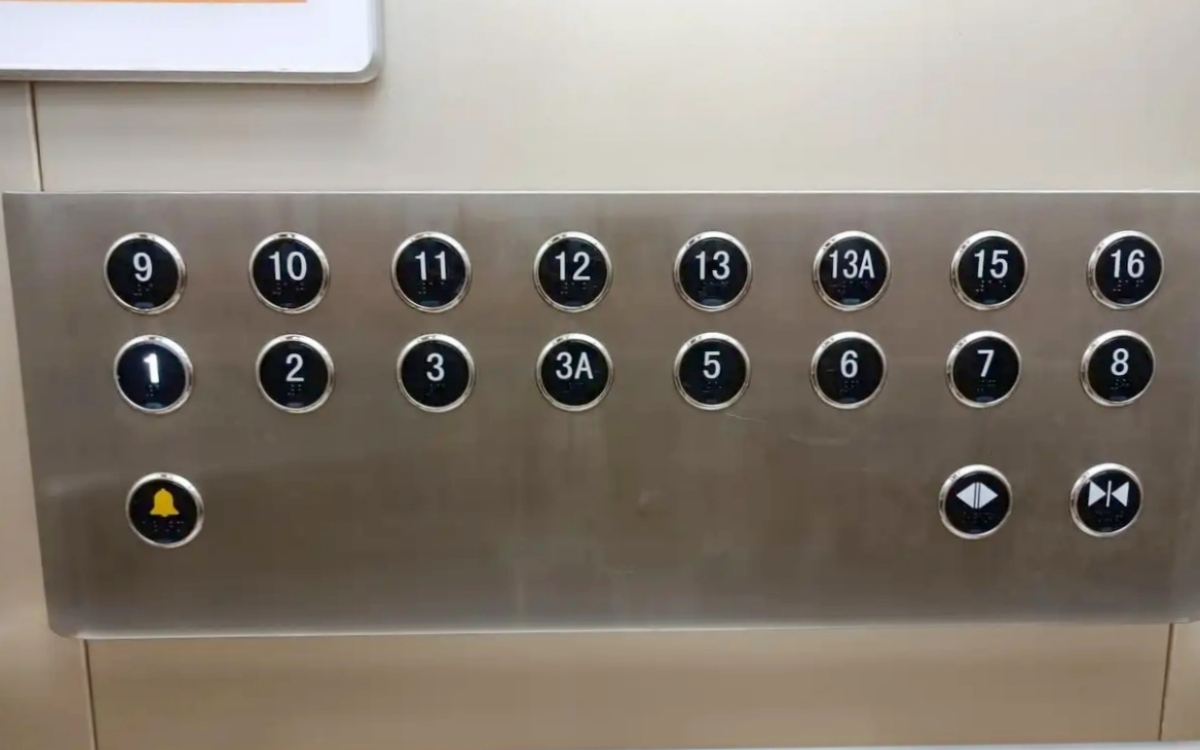
The number 4 is not used on elevator buttons in some buildings.
What Should You Avoid Doing at a Chinese Dinner Table?
Chinese meals are not only about food. They are also important social occasions for showing respect and building relationships.
Some dining behaviors may be considered impolite:
- Pointing at people with chopsticks
- Playing with chopsticks
- Sticking chopsticks upright in a bowl of rice
- Tapping bowls or plates with chopsticks
- Searching through dishes with chopsticks
Understanding Chinese Dining Etiquette
Many Chinese dining rules are connected with ideas of respect, cleanliness, and harmony at the table.
For example:
- Upright chopsticks resemble incense sticks used in ancestor ceremonies, which is associated with funerals rather than daily meals.
- Pointing chopsticks at someone is similar to pointing a finger and may appear disrespectful.
- Searching through shared dishes may suggest a lack of consideration for others.
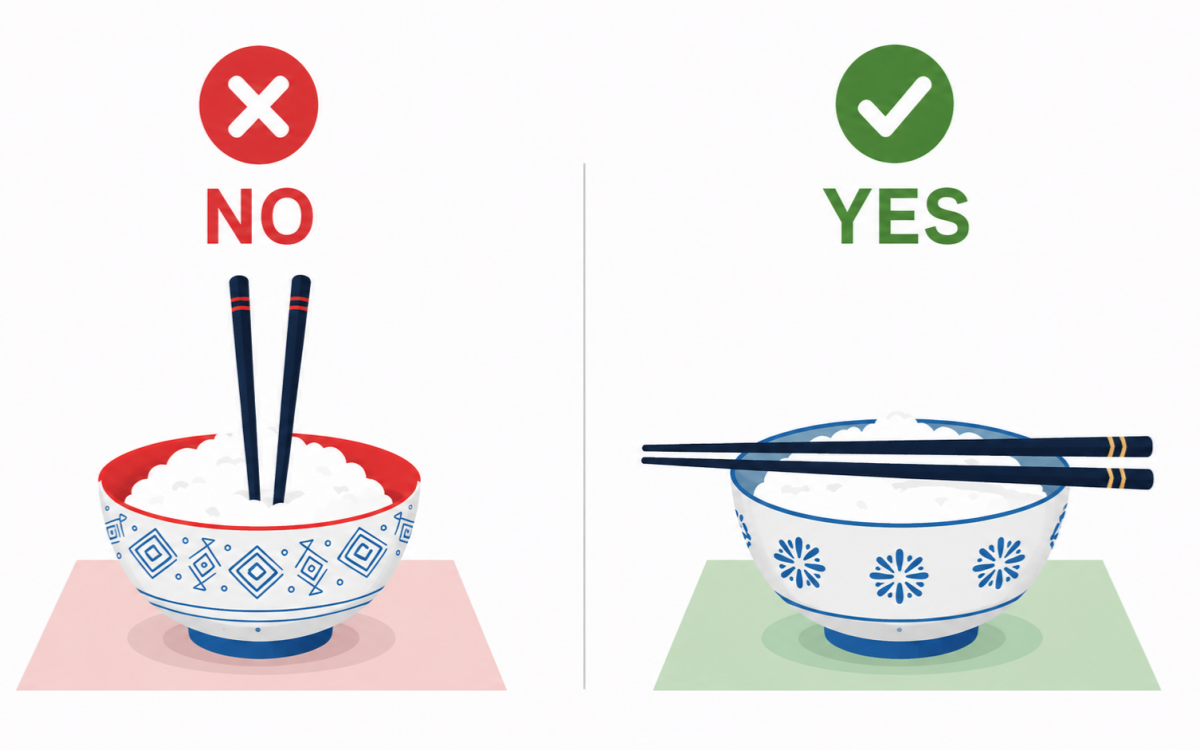
A Chinese Dining Etiquette
Better practice:
- ✅ Use chopsticks naturally.
- ✅ Take food politely from shared dishes.
- ✅ Follow the dining style of local hosts.
Where Should You Sit During a Chinese Banquet?
In Chinese dining culture, seating arrangements often reflect respect and social relationships.
The most honored seat is usually:
- The seat facing the entrance
- The innermost seat in a private dining room
- The position reserved for the host or most respected guest
Why is seating important?
Traditional Chinese society placed strong importance on age, status, and relationships. Seating arrangements became a way to show respect without words.
When attending a Chinese banquet:
- ✅ Wait for the host to arrange seating.
- ✅ Allow senior guests or important guests to sit first.
What Gifts Should You Avoid Giving in China?
Gift-giving is an important part of Chinese culture, especially when visiting someone’s home or meeting business partners.
Some gifts should be avoided because of their traditional meanings.
Avoid:
- Clocks or watches
Why? The Chinese pronunciation of “giving a clock” sounds similar to an expression connected with funeral traditions.
- Umbrellas
Why? The word for umbrella sounds similar to a word meaning separation, which may suggest a relationship breaking apart.
- Shoes
Why? Shoes have some traditional negative associations and are not considered the safest choice for formal gifts.
Better gift choices:
- ✅ Tea
- ✅ Local specialties
- ✅ Cultural souvenirs
- ✅ Practical gifts
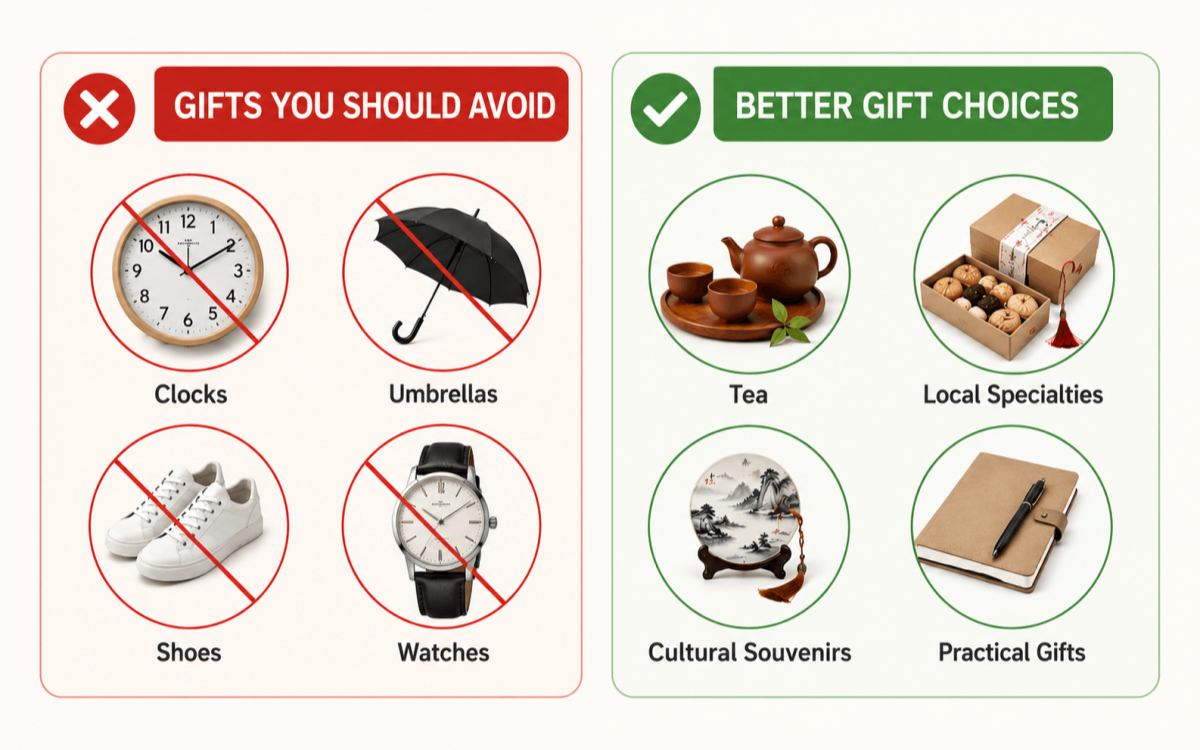
Some gift choices in China
How Should You Behave When Visiting Chinese Temples?
Chinese temples are important religious and cultural places.
Visitors should remember:
- Do not step directly on temple thresholds
- Keep voices low
- Dress respectfully
- Avoid touching Buddha statues or religious objects
- Follow photography rules
Temple Etiquette to Keep in Mind
Chinese temples represent a connection between cultural heritage and spiritual traditions.
For example:
- Avoiding the threshold shows respect for the sacred space.
- Quiet behavior helps maintain a peaceful environment.
- Appropriate clothing demonstrates consideration for other visitors.
What Does “Saving Face” Mean in Chinese Culture?
The concept of “face” (面子) is an important part of Chinese social communication.
It means showing respect and protecting someone’s dignity.
Why is this important?
Maintaining harmony has traditionally been valued in Chinese society, and preserving “face” helps support positive relationships.
Visitors should avoid:
- ❌ Publicly embarrassing someone
- ❌ Criticizing someone directly in front of others
- ❌ Rejecting someone’s kindness too strongly
Instead:
- ✅ Discuss problems privately.
- ✅ Use polite expressions.
- ✅ Show respect during disagreements.
What Other Cultural Details Should Travelers Know Before China Tours?
Many Chinese customs are based on simple principles:
- Respect elders
- Be considerate of others
- Maintain harmony
- Show good manners in public places
Understanding these cultural details can make your travel experiences more enjoyable.
Note for travel Partners & Tour Operators:
Preparing guests with these cultural insights before arrival can also help create more comfortable and meaningful China travel experiences.