Explore a Beijing student group travel case study featuring competition logistics, cultural visits, and ground services arranged by ChinaTourDMC for an overseas school team.
The group traveled to Beijing primarily to participate in The 2026 FIRST LEGO League Asia Open Championship in Huairou. The program combined the competition with visits to several of Beijing's major historical and cultural sites, including the Mutianyu Great Wall, the Forbidden City and the Summer Palace.
The competition itself was organized independently by the event organizers, while ChinaTourDMC was responsible for the group's arrangements in China.
With the support of ChinaTourDMC's local coordination, the student team successfully completed the program and achieved third place in its competition category.
Students celebrate and cheer during the FIRST LEGO League Challenge in Beijing.
The group had to work around a fixed competition schedule rather than a standard sightseeing itinerary.
The competition had fixed reporting and registration times, while the group also needed to travel between Huairou and other parts of Beijing for sightseeing, meals and accommodation.
Competition reporting, preparation and scheduled rounds had to take priority over sightseeing.
The competition venue was in Huairou, while several major attractions were located in central Beijing.
Students traveled with luggage, uniforms, project materials and other equipment requiring appropriate vehicle space and careful handling.
Major Beijing attractions required advance admission planning, security procedures and realistic consideration of walking distances.
The program took place in August, when Beijing can be hot and humid. Outdoor visits therefore needed to allow enough time for water, breaks and a comfortable pace.

Students meeting other international teams during the competition in Huairou.
The competition schedule was used as the starting point for planning the rest of the program. Transport, meals, sightseeing and rest periods were arranged around the fixed competition commitments.
Competition commitments guided each day's planning. Registration, preparation and scheduled rounds were confirmed first, with sightseeing, meals, transfers and rest periods arranged around them.
Vehicles were scheduled according to actual departure times, meeting points and equipment requirements rather than following a standard sightseeing timetable.
On competition days, additional travel time was allowed where needed, and later services were reviewed if event timings changed.
Guides worked alongside teachers and team leaders to communicate meeting points, daily arrangements and operational changes.
Admission times, entry procedures, walking distances and vehicle collection points were planned in advance, especially for large sites such as the Forbidden City, where security checks and walking between key areas required additional time.
Dietary information was collected before arrival and communicated to the relevant restaurants. Meal locations were selected according to the group's daily route.
When event timings changed, the effect on later services was reviewed across the daily program rather than handled as an isolated change. Vehicle schedules, meeting times and other arrangements were adjusted where necessary.
The Mutianyu section of the Great Wall was included in the program while the group were in the Huairou area. The visit allowed the group to experience one of Beijing's major historical sites without requiring an unnecessary return through central Beijing.
Before the visit, the guides explained the walking conditions, routes and meeting arrangements. The schedule also recognized that students and accompanying adults could have different walking speeds, so the schedule allowed them to experience the site without expecting everyone to cover the same distance.

A student group visiting the Mutianyu section of the Great Wall during its Beijing program.
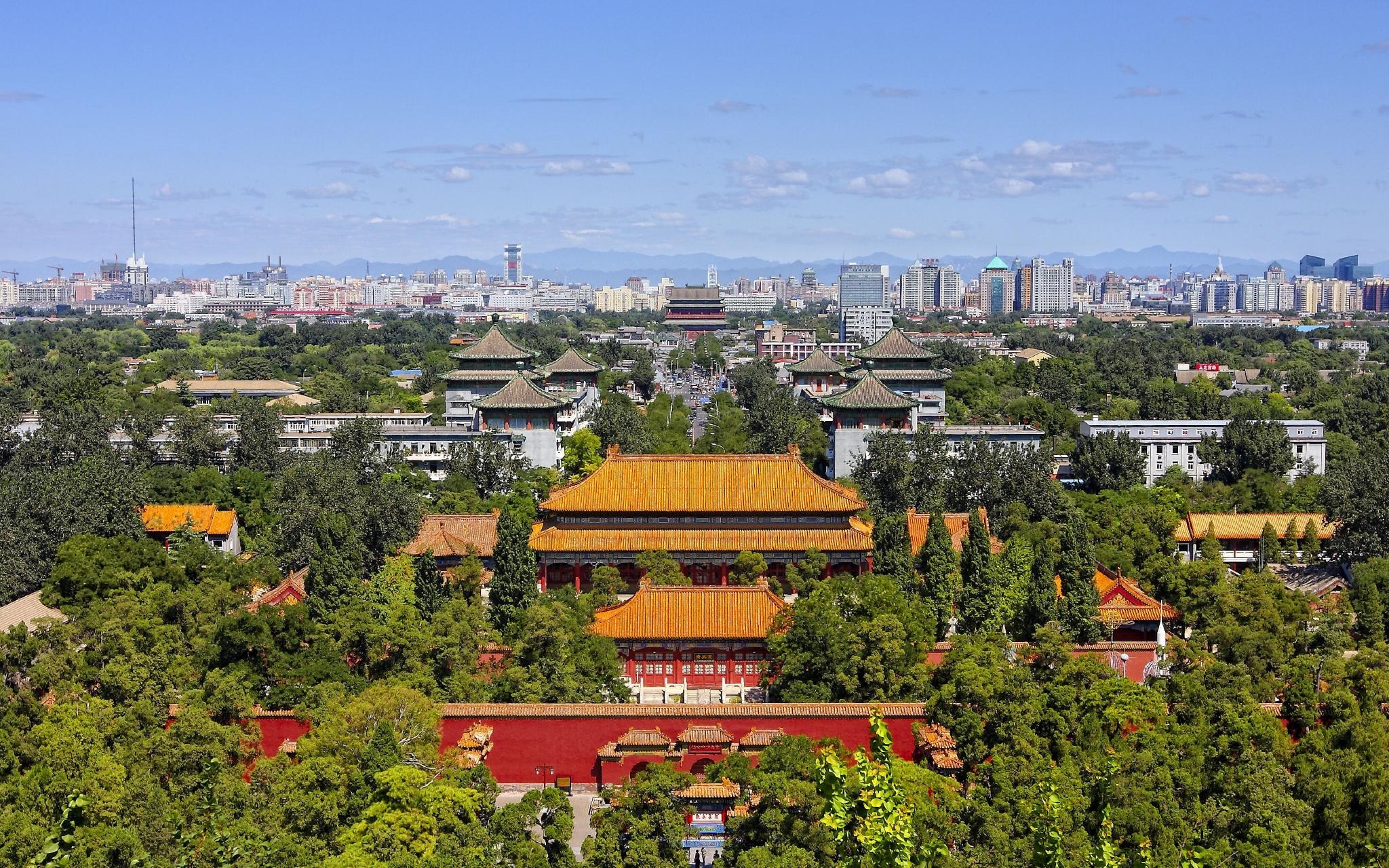
The Forbidden City introduced students to the scale and layout of China's former imperial capital.
For the group, the operational considerations included advance admission, passport information, security procedures, entrance arrangements, walking distance and the vehicle collection point.
The guide focused on the main features of the palace complex rather than attempting to cover every building, allowing the visit to remain educational without making the schedule unnecessarily demanding.
The Summer Palace provided a different type of historical experience, combining gardens, water, hills and architecture.
The visit also created a more varied pace within the program. Time around Kunming Lake and selected areas of the palace grounds could be adjusted according to weather, student energy levels and the remaining schedule.